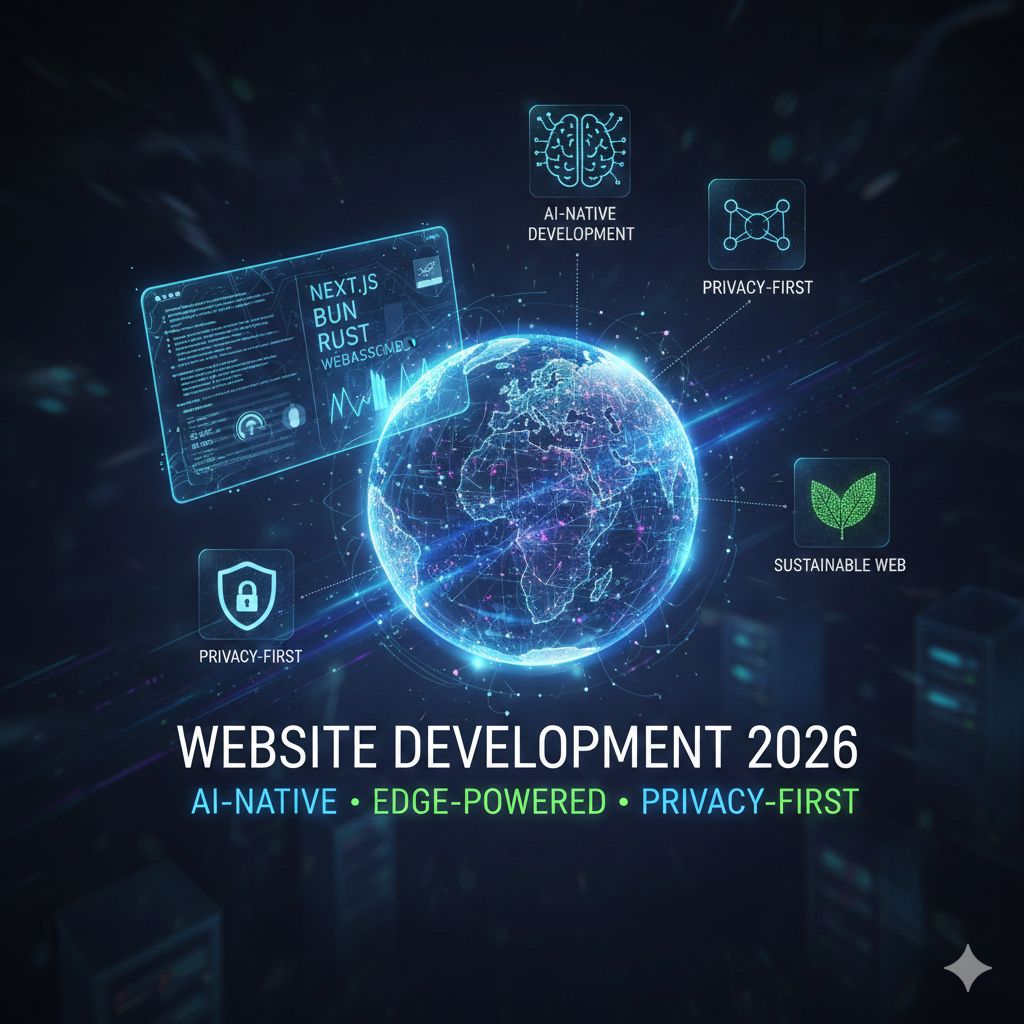
In the rapidly shifting digital landscape of 2026, a website is no longer just a digital brochure; it is a high-performance, AI-native ecosystem. For brands like Digitechus, staying ahead of the curve means moving beyond standard templates to embrace a future defined by agentic workflows, edge computing, and immersive user experiences.
This article explores the high-ranking keywords and core pillars of website development in 2026, providing a roadmap for businesses aiming to dominate search engine results and deliver unparalleled value.
1. The Era of AI-Native Development & Agentic Workflows
The most significant shift in 2026 is the transition from “AI-assisted” to AI-native development. At Digitechus, we recognize that modern web architecture must be built around AI integration rather than treating it as an afterthought.
- Agentic AI Systems: Unlike simple chatbots, 2026 features Agentic AI. These are autonomous systems capable of executing complex tasks—such as real-time inventory adjustments or personalized user journey mapping—without human intervention.
- Generative UI (GenUI): Websites now utilize GenUI to adapt their interface in real-time. If a user is a frequent shopper, the site might morph into a streamlined dashboard; if they are a first-time browser, it presents a rich, educational landing page.
- AI Search Optimization (GEO): Beyond traditional SEO, we now optimize for Generative Engine Optimization (GEO). This ensures your brand is accurately cited and recommended by AI models like Gemini, ChatGPT, and Perplexity.
2. Technical Powerhouses: Meta-Frameworks and Modern Runtimes
Speed and developer efficiency (DX) are the top ranking factors in 2026. The technical stack has consolidated around high-performance tools that prioritize Core Web Vitals.
The 2026 High-Performance Tech Stack
| Category | Technology | Why It Ranks High |
| Frontend | Next.js 16+ / Astro | Islands architecture and server components ensure near-zero JavaScript on the client side. |
| Runtime | Bun | Surpassed Node.js for its lightning-fast execution and built-in package management. |
| Styling | Tailwind CSS 4.0 | Utility-first design that leverages native CSS features like Subgrid and Container Queries. |
| Backend | Rust / Go | Used for high-scale microservices where memory safety and concurrency are critical. |
3. Edge-Native Architecture: Slashing Latency to Zero
In 2026, “the cloud” has moved to “the edge.” To meet the demand for instant interactivity, Digitechus implements Edge-Native Architecture.
- Serverless 2.0: Functions are now stateful. Using tools like Cloudflare Durable Objects, we can maintain user sessions at the edge, reducing round-trip times to a few milliseconds.
- WebAssembly (Wasm): Wasm allows for heavy-duty processing—like video editing or complex data visualization—to happen directly in the browser at near-native speeds.
- Green Coding: Efficiency is now a ranking factor. Smaller bundles and optimized assets not only improve speed but also lower the carbon footprint, appealing to the growing “Sustainable Web” movement.
4. UI/UX Trends: Immersive and Human-Centered
As AI-generated content floods the web, users crave authenticity and tactile experiences.
- Bento Grid Layouts: This modular approach (inspired by Japanese lunch boxes) organizes complex information into clean, interactive cards.
- Spatial UI & WebXR: With the adoption of spatial computing, websites now support AR/VR integration natively. Users can “place” a product in their room or explore a virtual showroom without leaving the browser.
- Motion UI & Micro-interactions: Subtle animations—such as magnetic buttons or scroll-triggered reveals—provide immediate feedback and keep users engaged, reducing bounce rates.
5. SEO 2.0: E-E-A-T and Social Proof
Google’s 2026 algorithms are hyper-focused on E-E-A-T (Experience, Expertise, Authoritativeness, and Trustworthiness).
- Personalized Brand Search: If your brand name is frequently searched alongside specific keywords (e.g., “Digitechus custom web apps”), your organic authority skyrockets.
- Video-First SEO: Every high-ranking blog post now includes an embedded, high-quality video. This “Watch or Read” choice increases time-on-page and caters to the visual search habits of Gen Alpha.
- Entity-Based SEO: Search engines no longer look for keyword matches; they look for topic clusters. Being a “Topical Authority” in a niche (like Fintech Web Design) is more valuable than ranking for a thousand generic keywords.
6. Privacy-First and Secure Development
In 2026, privacy is a feature, not just a compliance checkbox.
- Zero-Trust Architecture: Modern websites assume every request is a potential threat. Implementing Passkeys and Biometric Authentication has replaced the insecure password/email combo.
- Cookieless Tracking: We utilize first-party data and server-side tagging to gain insights without infringing on user privacy or being blocked by “Do Not Track” signals.
Conclusion: Future-Proofing Your Digital Presence
Website development in 2026 is an intricate dance between automated efficiency and human creativity. By leveraging AI-native workflows, edge-powered speed, and a commitment to E-E-A-T, Digitechus ensures that your business doesn’t just survive the next digital shift—it leads it.
2026 Readiness Checklist:
- [ ] Is your site optimized for Generative Search (GEO)?
- [ ] Does your stack utilize a modern runtime like Bun?
- [ ] Have you implemented Passkeys for enhanced security?
- [ ] Is your content strategy focused on Topic Clusters rather than single keywords?
Would you like Digitechus to perform a 2026 Readiness Audit on your current website to see where you can gain a competitive edge?