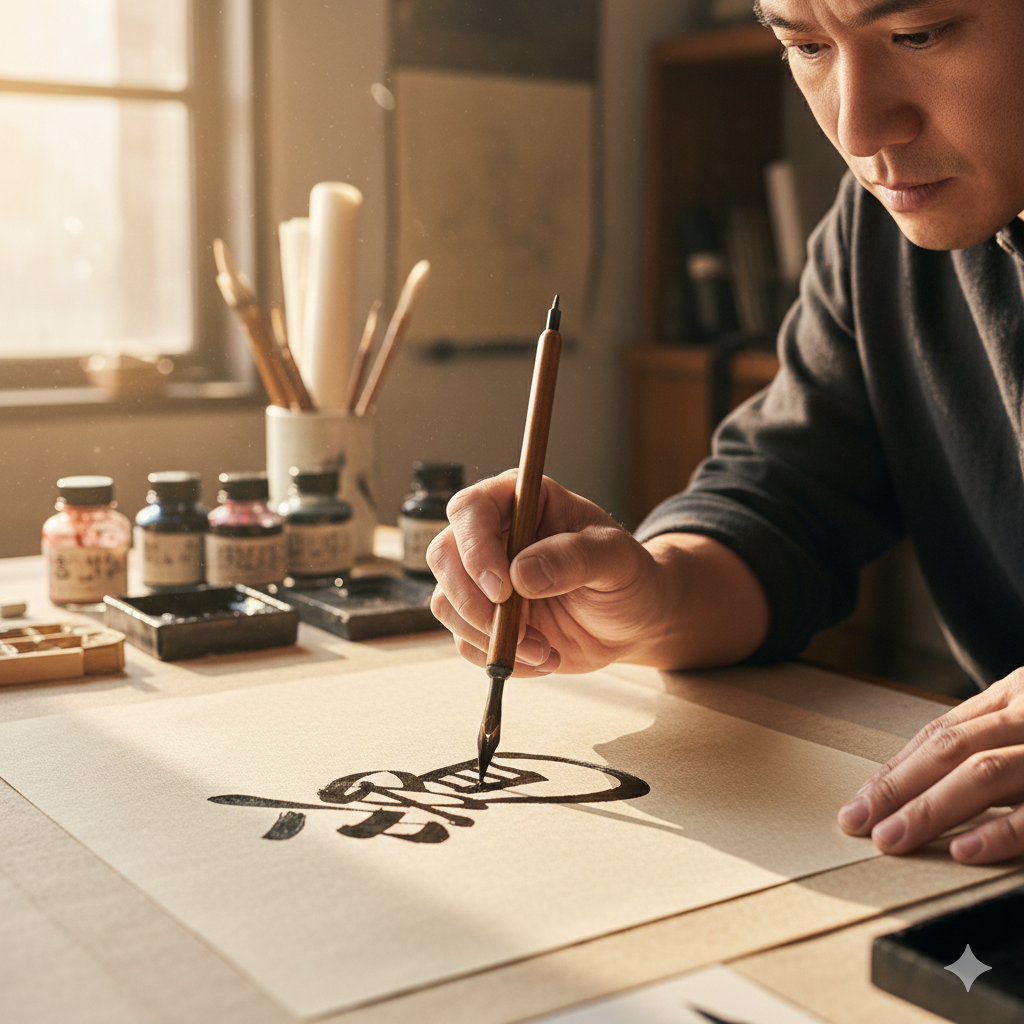
In an increasingly digital world, where communication is often reduced to fleeting texts and impersonal fonts, there exists an art form that champions beauty, patience, and the profound connection between hand and heart: calligraphy. More than just fancy handwriting, calligraphy is the visual art of writing, a disciplined craft where characters are not merely formed, but drawn with intention, grace, and an almost meditative rhythm.
From ancient scrolls to modern wedding invitations, calligraphy has woven itself into the fabric of human history and culture, serving as both a practical means of recording information and a sublime expression of artistic skill. It is a timeless pursuit that continues to captivate and inspire, reminding us of the enduring power of the written word.
What Exactly is Calligraphy? The Basics and Beyond
The word “calligraphy” originates from the Greek words kallos (beauty) and graphe (to write). At its core, it is the art of giving form to signs in an expressive, harmonious, and skillful manner. Unlike everyday handwriting, which aims for speed and legibility, calligraphy prioritizes aesthetic appeal. Every stroke, every curve, and every flourish is deliberate, meticulously planned, and executed with precision.
The essential tools of a calligrapher are deceptively simple:
- A writing instrument: Traditionally a dip pen with various nibs (pointed, broad-edged, or flex), but also brushes, quill pens, and even reed pens.
- Ink: Specially formulated for calligraphy, offering rich pigmentation and smooth flow.
- Paper: Chosen for its smooth surface, absorbency, and ability to showcase the ink without bleeding.
However, the true magic lies not just in the tools, but in the calligrapher’s understanding of form, spacing, pressure, and flow. It is a dance between controlled movements and artistic expression.
A Global Tapestry: The Rich History of Calligraphy
Calligraphy is not confined to a single culture or region; it is a universal art form that has developed distinct styles across continents, reflecting diverse linguistic traditions and spiritual beliefs.
1. Western Calligraphy
Rooted in the Latin alphabet, Western calligraphy evolved from ancient Roman scripts. Monks in medieval Europe were instrumental in preserving and developing these styles, meticulously hand-copying religious texts. Iconic Western scripts include:
- Uncial: A rounded, majestic script used from the 4th to 8th centuries.
- Carolingian Minuscule: Developed during Charlemagne’s reign, known for its clarity and legibility, forming the basis of modern lowercase letters.
- Gothic (Blackletter): Characterized by its dramatic, angular, and highly compressed letters, prevalent during the High Middle Ages.
- Italic (Chancery Hand): A graceful, flowing script developed during the Renaissance in Italy, still widely admired today.
- Copperplate and Spencerian: Elegant, ornate pointed pen scripts popular in the 18th and 19th centuries, often associated with formal documents and flourishing.
2. Eastern Calligraphy
In East Asia, calligraphy holds an even more revered status, often considered the highest art form alongside painting.
- Chinese Calligraphy: With a history spanning thousands of years, Chinese calligraphy is intrinsically linked to painting and poetry. Each character is a miniature artwork, imbued with philosophical meaning and executed with brush and ink. Styles range from the ancient Seal Script (Zhuan Shu) to the expressive Cursive Script (Cao Shu).
- Japanese Calligraphy (Shodo): Heavily influenced by Chinese tradition, Japanese calligraphy also incorporates its own unique syllabaries (hiragana and katakana) alongside kanji. It emphasizes balance, rhythm, and the spiritual connection between the calligrapher and the stroke.
3. Islamic Calligraphy
Forbidden from depicting human or animal figures in religious contexts, Islamic art channeled its expressive energy into calligraphy. The Arabic script, with its inherent fluidity, became a powerful medium for conveying divine messages from the Quran. Styles like Kufic, Naskh, Thuluth, and Diwani are not only beautiful but also serve as architectural decoration and manuscript illumination.
The Enduring Appeal in a Digital Age
One might wonder why an art as slow and deliberate as calligraphy continues to thrive in an era of instant gratification. The answer lies in its unique qualities:
- Human Connection: A handwritten piece of calligraphy carries a personal touch, a warmth that a printed font cannot replicate. It speaks of time, effort, and care.
- Therapeutic Practice: The act of practicing calligraphy is often described as meditative. The focus required, the slow, deliberate strokes, and the rhythm of breathing can be deeply calming and stress-reducing.
- Aesthetic Beauty: Calligraphy elevates text from mere information to a visual feast. It can convey emotion, solemnity, joy, or elegance through its form alone.
- Uniqueness: No two pieces of calligraphy are ever exactly alike, even from the same artist. Each creation holds a subtle, inherent uniqueness.
- Demand for Craftsmanship: There’s a growing appreciation for handmade, artisanal goods. Calligraphy finds its place in bespoke wedding invitations, certificates, artistic commissions, logos, and personalized gifts.
Learning the Art: Getting Started with Calligraphy
For those intrigued by the allure of beautiful writing, getting started with calligraphy is an accessible and rewarding journey.
- Choose a Script: Begin with a foundational script like Italic or Copperplate, as these often have excellent instructional resources. For Eastern calligraphy, mastering basic brush strokes is the first step.
- Gather Basic Supplies: A beginner’s calligraphy set typically includes a straight pen holder, a few broad-edged or pointed nibs, a bottle of non-waterproof ink, and smooth practice paper.
- Find Resources: Online tutorials, local workshops, and instructional books are invaluable. Many calligraphers offer courses that break down complex scripts into manageable strokes.
- Practice, Practice, Practice: Like any skill, mastery in calligraphy comes with consistent practice. Focus on understanding the basic strokes, letterforms, and spacing before moving on to flourishing or advanced techniques.
- Embrace Imperfection: The journey of learning calligraphy is as much about patience and persistence as it is about creating perfect letters. Each “imperfection” is a step in the learning process.
Calligraphy as a Contemporary Art Form
Today, calligraphy is experiencing a vibrant resurgence, not just as a traditional craft but as a contemporary art form. Artists are pushing boundaries, combining traditional scripts with modern aesthetics, digital tools, and mixed media. From large-scale installations to intricate hand-lettered logos for brands, calligraphy continues to demonstrate its versatility and timeless appeal.
It reminds us that even in a world saturated with digital communication, there is an irreplaceable beauty in the human touch, the deliberate stroke, and the enduring elegance of beautifully written words. The art of calligraphy is not merely about writing; it is about reverence for language, a celebration of form, and a testament to the enduring human desire to create beauty.